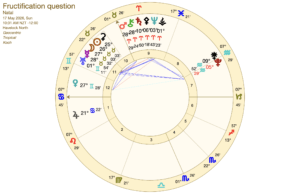
Rudolf Steiner and Fructification
Herein lies another of Rudolf Steiner’s ‘contradictions.
Fructification is generally understood to represent the fertilizing and growth of a seed, which refers to the time of pollination. and the seed chaos event. This could be called the Seed Chaos Fructification.
If ‘Fructification’ is placed into the search feature of the Rudolf Steiner archive, there are at least eight references of his usage of this understanding.
Interestingly, these references are the same story he discredits and then poses a different interpretation of, in Man as Symphony of the Creative Word – The Plant-World and the Elemental Nature-Spirits GA 230 Lecture VII.
Given this lecture is where he describes the role of the elemental beings in plant growth, and thus one of great import to many BD folks, this question needs addressing.
Firstly he says ‘Everywhere you will find that materialistic science describes matters as follows: The plant takes root in the ground, above the ground it develops its leaves, finally unfolding its blossoms, within the blossoms the stamens, then the seed-bud. Now—usually from another plant—the pollen from the anthers, from the pollen vessels, is carried over to the germ which is then fructified, and through this the seed of the new plant is produced. The germ is regarded as the female element and what comes from the stamens as the male—indeed matters cannot be regarded otherwise as long as people remain fixed in materialism, for then this process really does look like a fructification. This, however, it is not. “
He later offers “Undines carry the action of the chemical ether into the plants, sylphs the action of the light-ether into the plant’s blossoms. And the pollen now provides what may be called little air-ships, to enable the fire-spirits to carry the warmth into the seed. Everywhere warmth is collected with the help of the stamens, and is carried by means of the pollen from the anthers to the seeds and the seed vessels. And what is formed here in the seed-bud is entirely the male element which comes from the cosmos. It is not a case of the seed-vessel being female and the anthers of the stamens being male. In no way does fructification occur in the blossom, but only the pre-forming of the male seed. The fructifying force is what the fire-spirits in the blossom take from the warmth of the world-all as the cosmic male seed, which is united with the female element. This element, drawn from the forming of the plant has, as I told you, already earlier seeped down into the ground as ideal form, ( all the plant can be from that seasons growth ) and is resting there below. For plants the earth is the mother, the heavens the father. And all that takes place outside the domain of the earth is not the mother-womb for the plant. It is a colossal error to believe that the mother-principle of the plant is in the seed-bud. The fact is that this is the male-principle, which is drawn forth from the universe with the aid of the fire-spirits. The mother comes from the cambium, which spreads from the bark to the wood, and is carried down from above as ideal form. And what now results from the combined working of gnome-activity and fire-spirit activity—this is fructification. The gnomes are, in fact, the spiritual midwives of plant-reproduction. Fructification takes place below in the earth during the winter, when the seed comes into the earth and meets with the forms which the gnomes have received from the activities of the sylphs and undines and now carry to where these forms can meet with the fructifying seeds. “
What are we to do with these contradictions, especially when we see the comment about the Chamomile preparation, that it ‘works against the harmful effects of fructification’? I suspect this to mean the rush of a plant to seed, given the Chamomile prep strengthens the Etheric activity, and does indeed reduce a plants desire to go to seed. What would the harmful effects of the mid winter event be?
It would seem sensible for us to find a different word to describe the mid winter event, given it is such an important event in the life of nature and the plant and thus the Biodynamic seasonal year. The mid winter Earth Fructification from which the Wood Sap process emerges.